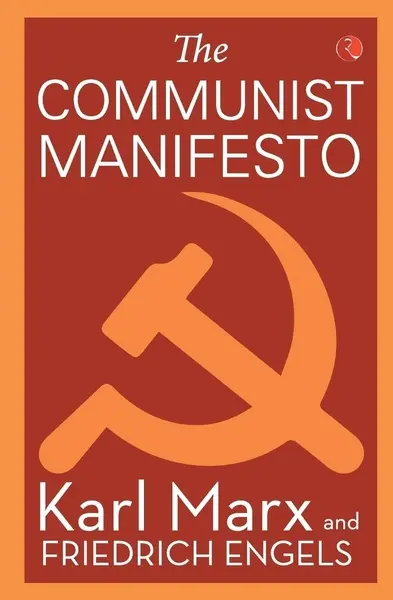
The Communist Manifesto, written by Karl Marx and Friedrich Engels in 1848, is one of the most influential political works in history. It outlines the principles of communism and critiques the social and economic systems of capitalism. The manifesto argues that history is defined by class struggles, primarily between the bourgeoisie (the capitalist class) and the proletariat (the working class). Marx and Engels assert that capitalism is inherently exploitative, as it centers around the extraction of surplus value from workers by capitalists.
The manifesto calls for a revolutionary transformation of society, where the proletariat rises up to overthrow the bourgeoisie, leading to the collapse of capitalism. It envisions a future society where the means of production—factories, land, and resources—are collectively owned, eradicating class distinctions and establishing a classless, stateless society. This would ultimately result in the dissolution of private property and the establishment of a system that prioritizes the collective good over individual profit.
Marx and Engels also advocate for the unity of workers across national borders, encouraging solidarity against exploitation and oppression. The manifesto, though brief, has had a profound influence on political movements and ideologies worldwide, shaping socialist and communist movements and providing the intellectual foundation for subsequent revolutions and state-building efforts.
Through its powerful call to arms and critique of economic inequality, The Communist Manifesto remains a cornerstone of leftist thought and continues to resonate with social and political movements seeking to challenge capitalist systems.